The Dopamine Truth: Why Eating Well Feels Harder Than It Should
The Thursday evening spiral
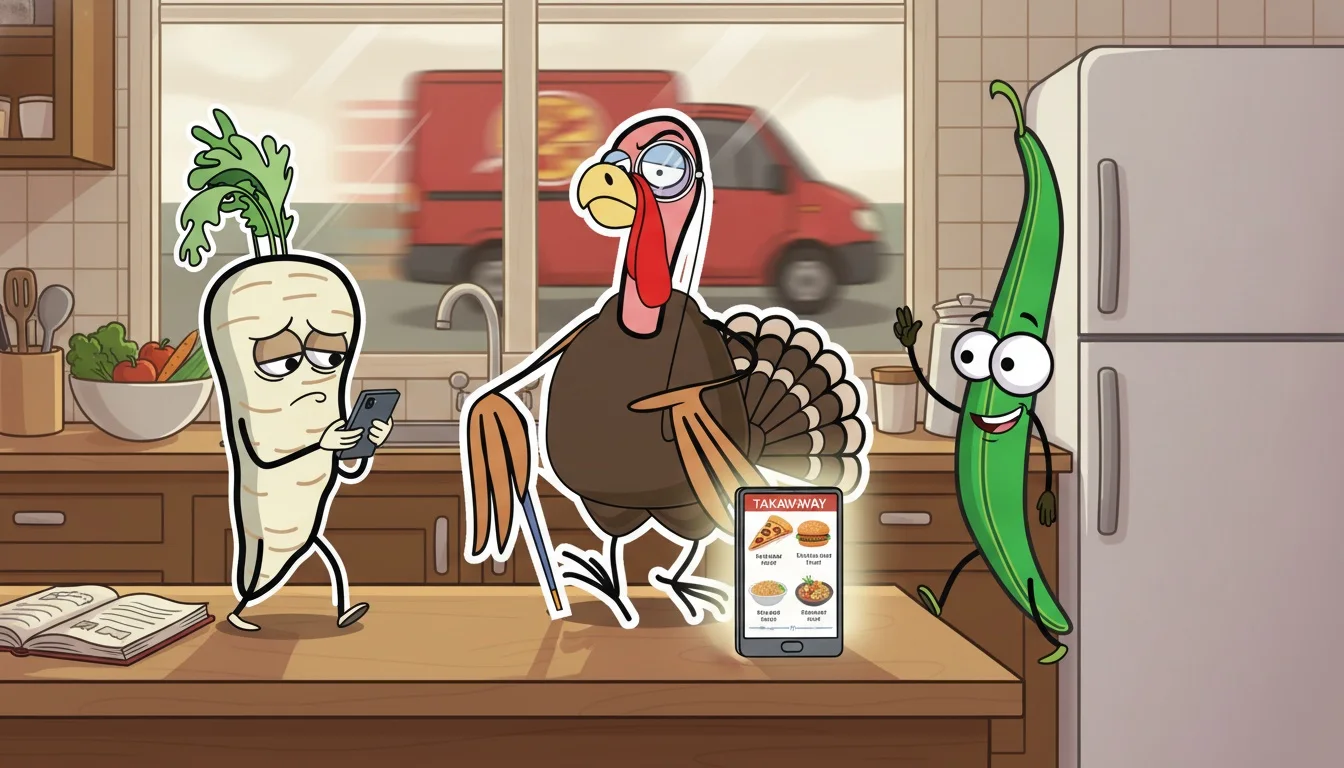
It's 5:47pm on a Thursday. You're exhausted. The kids are feral. You had every intention of making that chicken thing with the vegetables, but now the takeaway menu is calling and your brain is screaming yes, please, anything but another decision.
This isn't a willpower problem. It's a dopamine problem.
Your ancestors needed roughly four hours of hunting to achieve the same neurochemical reward you get from tapping three buttons on a food delivery app. Social media delivers dopamine instantly. So does sugar. So does scrolling through Netflix for twenty minutes before giving up and ordering pizza. Our brains never evolved to resist rewards this easy to access, which is why resisting them feels so incredibly hard.
Fast dopamine vs slow dopamine
Here's what most people don't realise: dopamine isn't just about pleasure. It's about motivation, pursuit, and the capacity to go after what matters to you. The problem is that modern life offers two very different types.
Fast dopamine comes from scrolling, sugary snacks, alcohol, or that burger you didn't plan to eat but ordered anyway. It spikes hard and crashes harder. Your brain seeks balance, so the faster dopamine shoots up, the further it drops below baseline to compensate. That's why endless scrolling leaves you feeling depleted rather than recharged. That's why the post-takeaway slump feels worse than the hunger did.
Slow dopamine is different. It comes from effortful activities: cooking a proper meal, reading a book, playing with your kids without your phone in your hand. The rise is gradual, the fall is gentle, and you end up better off than when you started. Learning to boost your natural dopamine production each day has a monumental impact on motivation and your capacity to pursue what you're seeking in life.
The question is: how do you choose slow dopamine when fast dopamine is sitting in your pocket, your fridge, and your delivery app history?
Why home cooking is dopamine training
Cooking at home more often isn't about nutrition lectures or perfect ingredients. It's about building the habit of doing something slightly harder now for something better later. That's dopamine training.
Every time you choose the effortful option over the instant one, you're strengthening your capacity to make that choice again. The anterior mid-cingulate cortex in your brain physically strengthens each time you override an impulse or force yourself to do something that requires a bit more effort. It works like a muscle: every small win makes the next act of discipline slightly easier.
This is why families who eat together regularly aren't just eating better food. They're building a routine that trains everyone's brain to value slow rewards. Kids who grow up with regular family meals show better academic performance, language development, and mental health outcomes. They're learning early that the good stuff takes a bit longer, and that it's worth it.
Family meals also save time and money by eliminating separate cooking while ensuring parents actually eat too. They create structure that children understand, and routine mealtimes can naturally stimulate appetite. The key is keeping it relaxed and sociable, not rushed or stressed, because how you eat together matters as much as what you eat.
What this means for your household
You already know what you should eat. The gap isn't information. It's behaviour.
The dopamine system explains why knowing doesn't equal doing. Your brain is wired to seek the path of least resistance, especially when you're tired, overwhelmed, or touched out at the end of a long day. Fast dopamine will always feel more tempting in the moment. The trick is making slow dopamine easier to access.
That means changing the cue, not lecturing yourself about willpower. Keep ingredients visible. Involve your kids in simple tasks so mealtimes feel like something you do together, not something you do for them. Start with one proper meal a day, even if it's ten minutes at the table with toast and eggs. Let everyone choose their own portion sizes and follow their own hunger cues, because forcing kids to finish plates backfires and pushes them toward overeating later in life.
Tucki helps families close this behaviour gap by making home cooking feel less overwhelming and more automatic. It's not about perfection. It's about building sustainable routines that actually work in real life, with real kids, on real Thursdays when everything feels hard.
The long-term reward isn't some distant transformation. It's feeling slightly less exhausted, slightly more in control, and slightly more connected around the table. That's worth more than any quick dopamine hit, and your brain will start to agree once you give it the chance.